
Categories
AEO/GEO Digital Marketing SEO

The 40-Word Rule: How to Structure Paragraphs for AI Citations in 2026

Most content written for traditional SEO fails in AI search because it was built for a different reading system.

Google’s crawlers have always been forgiving. They can parse dense paragraphs, infer structure from context, and piece together meaning from imperfect formatting. AI systems do not work that way. Tools like ChatGPT, Perplexity, and Google’s AI Overview do not read pages the way a human does. They break content into chunks, evaluate each chunk for clarity and relevance, and pull the pieces that best answer the query being asked.

Categories
AEO/GEO Digital Marketing SEO

What Is AEO and GEO? The Business Owner’s Guide to Getting Found in AI Search

Something changed in how people find businesses online, and most business owners haven’t caught up yet.

For the past two decades, getting found meant ranking on Google. Someone typed a query, a list of blue links appeared, and the businesses near the top got the clicks. The rules were familiar: publish content, build links, keep your website healthy.

That model still exists. But a new layer has been added on top of it, and it is growing fast.

Categories
AEO/GEO Digital Marketing SEO

Why Your Content Isn’t Showing Up in ChatGPT Answers

You have a website. You publish content regularly. You rank for some things in Google. But when you ask ChatGPT or Claude about a topic you’ve written about extensively, your site doesn’t come up. Someone else does.

This is one of the most common frustrations people bring to me, and the good news is that it’s usually fixable. The causes tend to cluster around a handful of issues, and most of them don’t require a technical background to address.


First, Understand What AI Engines Are Actually Looking For

Before diagnosing why your content isn’t being cited, it helps to understand what these engines are trying to do. When ChatGPT or Perplexity constructs an answer, it’s looking for sources that clearly and specifically address the question being asked. Not the best-known site on the topic. Not the highest-ranking page in Google. The source that most directly and accurately answers that specific question.

That distinction matters because it means a well-structured page on a newer site can consistently outperform a vague, meandering post on an established one. The playing field is more level than most people assume.

If you want to go deeper on the mechanics of how citation decisions get made, I covered the four main factors in detail here.


The Most Common Reasons Content Gets Skipped

1. Your Content Buries the Answer

This is the single most common problem. Most content is written to build toward a conclusion — context first, explanation second, answer third. That structure works for essays and arguments. It does not work for AI citation.

AI engines extract information from text the way a researcher takes notes. They look for declarative, self-contained statements that can be used without requiring the surrounding context. If the answer to a question doesn’t appear until the third paragraph, or if it’s scattered across multiple sections without ever being stated directly, the content is hard to mine.

The fix is straightforward: lead with the answer, then explain it. Every section of your content should open with the most important point, not work toward it.


2. You’re Writing About Topics, Not Answering Questions

There’s a difference between a post that covers a topic and a post that answers a question. “A Guide to Schema Markup” covers a topic. “What Schema Markup Should You Add for AEO?” answers a question.

AI engines are built to respond to questions. The way people use ChatGPT and Perplexity is conversational and specific — they ask things. Content organized around explicit questions maps directly to how these engines construct responses. Content organized around broad topics is harder to match to a specific query.

This doesn’t mean every post needs a question as its title. It means the structure inside each post should anticipate the questions a reader would have and answer them directly and sequentially.


3. Your Site Isn’t Clearly About Anything

AI engines pay attention to topical authority — whether a site has demonstrated consistent, in-depth coverage of a specific subject area. A site that publishes across fifteen loosely related topics looks scattered compared to one that covers three topics thoroughly and consistently.

If you look at your site and the content ranges from real estate marketing to AI search to general business advice to local SEO, that breadth works against you in AI citation. The engines can’t confidently say your site is an authority on any particular thing.

The solution is to pick your primary topic cluster and build it out deliberately. Not all at once — that’s not realistic — but with enough consistency over time that the pattern becomes clear. If AEO and AI search optimization is your lane, every piece of content should either directly address that topic or connect back to it.

You can see an example of how I’ve structured this with the AEO Playbook — a free resource that walks through the full strategy in one place, which also serves as a hub that the blog content builds around.


4. There’s No Clear Author or Expertise Signal

Anonymous content is cited less frequently than content with a credentialed, named author. This is especially true in any category that touches health, finance, or professional advice — but it applies broadly.

If your posts don’t have a byline, add one. If the byline doesn’t include any context about who you are and why you’re qualified to write on the topic, add that. A short author bio with relevant credentials and experience is one of the easiest credibility signals to implement and one of the most consistently overlooked.

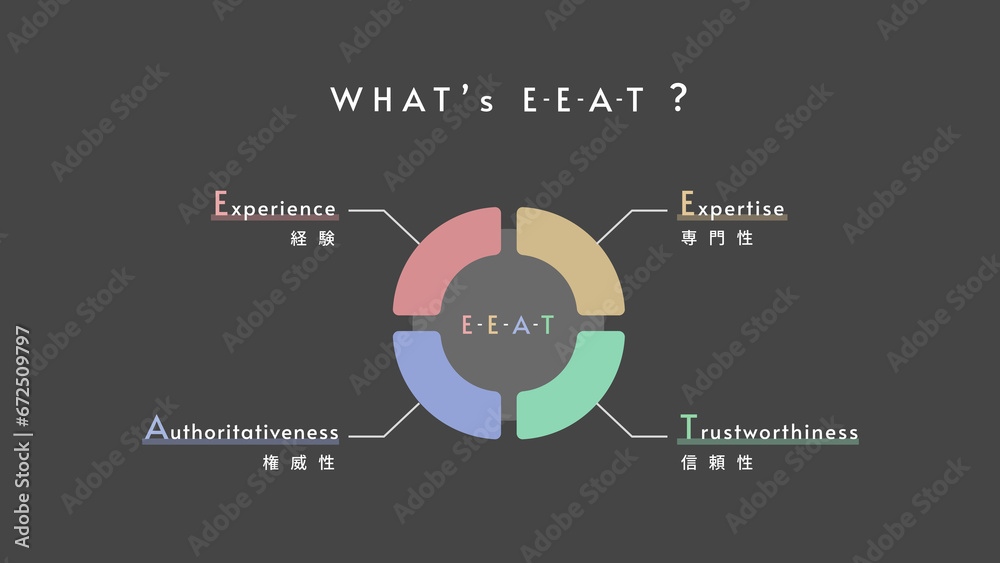
This is part of what Google calls E-E-A-T (Experience, Expertise, Authoritativeness, Trustworthiness), and AI engines apply similar logic. The question they’re implicitly asking is: should I trust this source enough to cite it in an answer someone is relying on?


5. Your Technical Setup Is Blocking AI Crawlers

This one surprises people. It’s possible to have excellent content that no AI engine can access because the crawlers that power those engines are being blocked — either intentionally or accidentally.

AI crawlers (GPTBot for OpenAI, PerplexityBot for Perplexity, ClaudeBot for Anthropic, Google-Extended for Google AI) follow robots.txt rules just like search engine bots. If your robots.txt has a broad Disallow directive that applies to all user agents, or if you’re running security settings that block unrecognized bots, you may be invisible to AI engines without knowing it.

Check your robots.txt file by going to yourdomain.com/robots.txt in a browser. If you see Disallow: / under User-agent: *, that’s blocking everything. You can add explicit Allow rules for the specific AI crawlers, or adjust the blanket rule to only apply where you actually want to restrict access.


6. Your Schema Markup Is Missing or Incomplete

Schema markup is structured data that helps AI engines understand what your content is about, who wrote it, and how it fits into the broader context of your site. Without it, the engine has to infer all of that from the text alone.

For most content pages, the minimum useful schema is Article or BlogPosting with a named author (Person type with links to their professional profiles) and a publisher (Organization with a logo). FAQPage schema on question-and-answer sections is particularly valuable because it maps directly to how AI engines consume and reproduce information.

If you’re on WordPress, you can implement this through a plugin like Yoast or RankMath, or add it manually via your functions.php file. Either way, validating your schema at schema.org/validator before deploying is worth the extra five minutes.


Where to Start

If you’re going through this list and several of these apply, prioritize in this order:

First, fix the content structure on your most important existing pages — the ones covering topics you most want to be cited on. Lead with the answer. Make sure each section could stand alone as a response to a specific question.

Second, add author information and credentials if they’re missing. This is a fast fix with real impact.

Third, check your robots.txt and confirm AI crawlers aren’t being blocked.

Fourth, implement basic schema markup on content pages if it isn’t in place.

The technical setup and schema work is covered in depth in the AEO Playbook if you want the full walkthrough, including specific schema types, llms.txt implementation, and a 90-day action plan.

If you’re working on a healthcare site specifically, there are additional considerations around E-E-A-T and YMYL content standards — I wrote about those in the context of how health systems can approach AI search in this post.


One Thing Worth Saying Directly

Getting cited by AI engines is not a switch you flip. It’s the result of publishing content that is well-structured, credible, and specific enough to be genuinely useful to someone constructing an answer. The sites that show up consistently in AI-generated responses aren’t gaming anything — they’ve just built the kind of content these engines are designed to surface.

The encouraging part is that the bar isn’t as high as it might seem. Most content online is vague, poorly structured, and anonymously published. If you do the opposite of those things, consistently, you’re ahead of the majority of what AI engines are working with.

That’s a more achievable goal than it sounds.

Categories
AEO/GEO Digital Marketing

How AI Search Engines Decide What to Cite (And How to Get on the List)

If you’ve searched for something in ChatGPT or Perplexity lately and noticed it pulling answers from specific websites, you might have wondered how those sites got there. It doesn’t look much like traditional SEO. There’s no rank 1 through 10, no obvious connection to domain authority scores, and sometimes the cited sources aren’t the biggest names in the industry..

That’s not random. There’s a logic to it, and once you understand it, you can start engineering for it.

Categories
AEO/GEO Digital Marketing SEO

How Regional Health Systems Can Compete in AI Search Without Enterprise Budgets

Major academic medical centers dominate AI search results for healthcare queries. Their established authority, vast content libraries, and significant marketing resources create visibility that smaller systems struggle to match. Regional health systems watching large competitors appear in ChatGPT responses and AI Overviews may wonder whether AI search competition is even worth attempting. I’m here to tell you that it is.

Regional health systems have advantages that large systems cannot easily replicate. Local authority, community connections, and focused expertise create opportunities for AI search visibility that size alone cannot provide. The key is competing strategically rather than trying to match enterprise content volume.