
Categories
AEO/GEO Digital Marketing SEO

The 40-Word Rule: How to Structure Paragraphs for AI Citations in 2026

Most content written for traditional SEO fails in AI search because it was built for a different reading system.

Google’s crawlers have always been forgiving. They can parse dense paragraphs, infer structure from context, and piece together meaning from imperfect formatting. AI systems do not work that way. Tools like ChatGPT, Perplexity, and Google’s AI Overview do not read pages the way a human does. They break content into chunks, evaluate each chunk for clarity and relevance, and pull the pieces that best answer the query being asked.

Categories
AEO/GEO Digital Marketing SEO

What Is AEO and GEO? The Business Owner’s Guide to Getting Found in AI Search

Something changed in how people find businesses online, and most business owners haven’t caught up yet.

For the past two decades, getting found meant ranking on Google. Someone typed a query, a list of blue links appeared, and the businesses near the top got the clicks. The rules were familiar: publish content, build links, keep your website healthy.

That model still exists. But a new layer has been added on top of it, and it is growing fast.

Categories
AEO/GEO Digital Marketing SEO

Why Your Content Isn’t Showing Up in ChatGPT Answers

You have a website. You publish content regularly. You rank for some things in Google. But when you ask ChatGPT or Claude about a topic you’ve written about extensively, your site doesn’t come up. Someone else does.

This is one of the most common frustrations people bring to me, and the good news is that it’s usually fixable. The causes tend to cluster around a handful of issues, and most of them don’t require a technical background to address.


First, Understand What AI Engines Are Actually Looking For

Before diagnosing why your content isn’t being cited, it helps to understand what these engines are trying to do. When ChatGPT or Perplexity constructs an answer, it’s looking for sources that clearly and specifically address the question being asked. Not the best-known site on the topic. Not the highest-ranking page in Google. The source that most directly and accurately answers that specific question.

That distinction matters because it means a well-structured page on a newer site can consistently outperform a vague, meandering post on an established one. The playing field is more level than most people assume.

If you want to go deeper on the mechanics of how citation decisions get made, I covered the four main factors in detail here.


The Most Common Reasons Content Gets Skipped

1. Your Content Buries the Answer

This is the single most common problem. Most content is written to build toward a conclusion — context first, explanation second, answer third. That structure works for essays and arguments. It does not work for AI citation.

AI engines extract information from text the way a researcher takes notes. They look for declarative, self-contained statements that can be used without requiring the surrounding context. If the answer to a question doesn’t appear until the third paragraph, or if it’s scattered across multiple sections without ever being stated directly, the content is hard to mine.

The fix is straightforward: lead with the answer, then explain it. Every section of your content should open with the most important point, not work toward it.


2. You’re Writing About Topics, Not Answering Questions

There’s a difference between a post that covers a topic and a post that answers a question. “A Guide to Schema Markup” covers a topic. “What Schema Markup Should You Add for AEO?” answers a question.

AI engines are built to respond to questions. The way people use ChatGPT and Perplexity is conversational and specific — they ask things. Content organized around explicit questions maps directly to how these engines construct responses. Content organized around broad topics is harder to match to a specific query.

This doesn’t mean every post needs a question as its title. It means the structure inside each post should anticipate the questions a reader would have and answer them directly and sequentially.


3. Your Site Isn’t Clearly About Anything

AI engines pay attention to topical authority — whether a site has demonstrated consistent, in-depth coverage of a specific subject area. A site that publishes across fifteen loosely related topics looks scattered compared to one that covers three topics thoroughly and consistently.

If you look at your site and the content ranges from real estate marketing to AI search to general business advice to local SEO, that breadth works against you in AI citation. The engines can’t confidently say your site is an authority on any particular thing.

The solution is to pick your primary topic cluster and build it out deliberately. Not all at once — that’s not realistic — but with enough consistency over time that the pattern becomes clear. If AEO and AI search optimization is your lane, every piece of content should either directly address that topic or connect back to it.

You can see an example of how I’ve structured this with the AEO Playbook — a free resource that walks through the full strategy in one place, which also serves as a hub that the blog content builds around.


4. There’s No Clear Author or Expertise Signal

Anonymous content is cited less frequently than content with a credentialed, named author. This is especially true in any category that touches health, finance, or professional advice — but it applies broadly.

If your posts don’t have a byline, add one. If the byline doesn’t include any context about who you are and why you’re qualified to write on the topic, add that. A short author bio with relevant credentials and experience is one of the easiest credibility signals to implement and one of the most consistently overlooked.

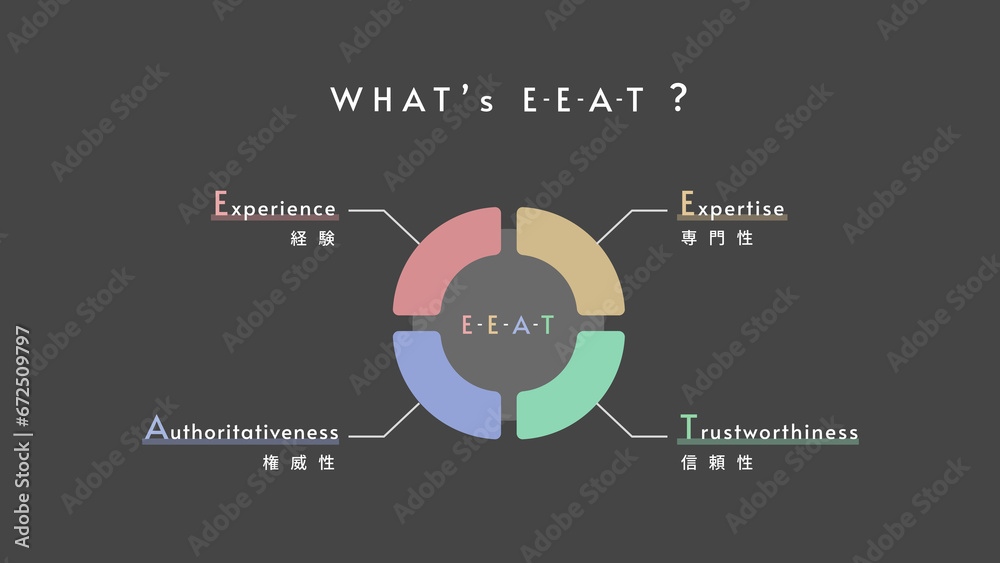
This is part of what Google calls E-E-A-T (Experience, Expertise, Authoritativeness, Trustworthiness), and AI engines apply similar logic. The question they’re implicitly asking is: should I trust this source enough to cite it in an answer someone is relying on?


5. Your Technical Setup Is Blocking AI Crawlers

This one surprises people. It’s possible to have excellent content that no AI engine can access because the crawlers that power those engines are being blocked — either intentionally or accidentally.

AI crawlers (GPTBot for OpenAI, PerplexityBot for Perplexity, ClaudeBot for Anthropic, Google-Extended for Google AI) follow robots.txt rules just like search engine bots. If your robots.txt has a broad Disallow directive that applies to all user agents, or if you’re running security settings that block unrecognized bots, you may be invisible to AI engines without knowing it.

Check your robots.txt file by going to yourdomain.com/robots.txt in a browser. If you see Disallow: / under User-agent: *, that’s blocking everything. You can add explicit Allow rules for the specific AI crawlers, or adjust the blanket rule to only apply where you actually want to restrict access.


6. Your Schema Markup Is Missing or Incomplete

Schema markup is structured data that helps AI engines understand what your content is about, who wrote it, and how it fits into the broader context of your site. Without it, the engine has to infer all of that from the text alone.

For most content pages, the minimum useful schema is Article or BlogPosting with a named author (Person type with links to their professional profiles) and a publisher (Organization with a logo). FAQPage schema on question-and-answer sections is particularly valuable because it maps directly to how AI engines consume and reproduce information.

If you’re on WordPress, you can implement this through a plugin like Yoast or RankMath, or add it manually via your functions.php file. Either way, validating your schema at schema.org/validator before deploying is worth the extra five minutes.


Where to Start

If you’re going through this list and several of these apply, prioritize in this order:

First, fix the content structure on your most important existing pages — the ones covering topics you most want to be cited on. Lead with the answer. Make sure each section could stand alone as a response to a specific question.

Second, add author information and credentials if they’re missing. This is a fast fix with real impact.

Third, check your robots.txt and confirm AI crawlers aren’t being blocked.

Fourth, implement basic schema markup on content pages if it isn’t in place.

The technical setup and schema work is covered in depth in the AEO Playbook if you want the full walkthrough, including specific schema types, llms.txt implementation, and a 90-day action plan.

If you’re working on a healthcare site specifically, there are additional considerations around E-E-A-T and YMYL content standards — I wrote about those in the context of how health systems can approach AI search in this post.


One Thing Worth Saying Directly

Getting cited by AI engines is not a switch you flip. It’s the result of publishing content that is well-structured, credible, and specific enough to be genuinely useful to someone constructing an answer. The sites that show up consistently in AI-generated responses aren’t gaming anything — they’ve just built the kind of content these engines are designed to surface.

The encouraging part is that the bar isn’t as high as it might seem. Most content online is vague, poorly structured, and anonymously published. If you do the opposite of those things, consistently, you’re ahead of the majority of what AI engines are working with.

That’s a more achievable goal than it sounds.

Categories
AEO/GEO Digital Marketing SEO

How Regional Health Systems Can Compete in AI Search Without Enterprise Budgets

Major academic medical centers dominate AI search results for healthcare queries. Their established authority, vast content libraries, and significant marketing resources create visibility that smaller systems struggle to match. Regional health systems watching large competitors appear in ChatGPT responses and AI Overviews may wonder whether AI search competition is even worth attempting. I’m here to tell you that it is.

Regional health systems have advantages that large systems cannot easily replicate. Local authority, community connections, and focused expertise create opportunities for AI search visibility that size alone cannot provide. The key is competing strategically rather than trying to match enterprise content volume.

Categories
AEO/GEO Digital Marketing SEO

Schema Markup for Medical Content: What Works in AI Search vs Traditional SEO

Schema markup has been part of SEO for over a decade. For medical content, structured data has always helped search engines understand health information accurately. Now, with AI search engines becoming primary information sources for patients, schema markup serves an additional critical function.

AI systems parse structured data to understand content relationships, verify source authority, and extract accurate information. Medical schema markup that worked well for traditional SEO often needs enhancement for AI search contexts. Understanding these differences helps healthcare organizations implement schema strategies that succeed across both traditional and AI search.

How AI Systems Use Schema Differently

Traditional search engines use schema primarily for rich results display. FAQ schema generates expandable answers. Event schema creates event listings. Recipe schema produces recipe cards. The schema helps search engines present information attractively in results pages.

AI search systems use schema for deeper understanding. They parse structured data to identify what type of content they’re processing, who created it, and how entities relate to each other. Schema becomes a trust signal rather than just a display format.

When AI systems evaluate medical content, schema markup provides explicit signals about content type, author credentials, medical review processes, and topic categorization. Without these signals, AI systems must infer this information from unstructured content, which introduces interpretation uncertainty.

For medical content specifically, schema markup helps AI systems recognize that content falls into YMYL categories requiring heightened scrutiny. Medical schema types trigger evaluation appropriate for health information rather than general content evaluation.

Essential Medical Schema Types for AI Search

Medical content benefits from healthcare-specific schema types that general content cannot use. These types provide explicit categorization signals that help AI systems process health information appropriately.

MedicalWebPage schema identifies pages as medical content. Properties include medicalSpecialty, which categorizes content by medical field, and relevantSpecialty, which connects content to appropriate clinical areas. The lastReviewed and reviewedBy properties document medical review processes AI systems look for.

MedicalCondition schema defines health conditions your content addresses. Include name, alternateName, and description properties. The signOrSymptom property lists associated symptoms. The possibleTreatment property connects to treatments discussed.

Drug schema provides structured information about medications. Include activeIngredient, administrationRoute, dosageForm, and indication properties. The warning property documents safety information AI systems should recognize when extracting drug information.

MedicalProcedure schema defines medical procedures. Include procedureType to categorize as diagnostic, therapeutic, or surgical. The bodyLocation property identifies anatomy involved. The howPerformed property describes the procedure.

Author and Publisher Schema for Medical Authority

AI systems heavily weight author credentials when evaluating medical content. E-E-A-T signals must be machine-readable for AI systems to process them effectively.

Person schema for medical authors should include:

The jobTitle property should reflect clinical roles like “Cardiologist” or “Board-Certified Family Physician.” Avoid vague titles like “Contributor” that obscure credentials.

The hasCredential property can list board certifications, medical licenses, and relevant credentials. Use the Credential type to structure this information properly.

The alumniOf property connects authors to medical schools and training programs. Use the Organization type with proper identifiers for these institutions.

The worksFor property identifies clinical affiliations. Connections to hospitals, medical schools, and healthcare systems strengthen authority signals.

Organization schema for healthcare publishers should establish:

The medicalSpecialty property when applicable identifies organizational focus areas. A cardiology practice should identify cardiovascular medicine as its specialty.

The accreditation property documents relevant accreditations like The Joint Commission certification.

The sameAs property should link to Wikipedia pages, Wikidata entries, and authoritative directory listings that verify organizational identity.

Connecting Authors to Content

AI systems evaluate whether content creators have appropriate expertise for topics they cover. Schema markup should establish these connections explicitly.

Article schema should include:

The author property linking to Person schema for medical authors. Avoid anonymous content attribution.

The reviewedBy property linking to medical reviewers when different from authors.

The datePublished and dateModified properties for recency signals.

The about property connecting to MedicalCondition, Drug, or other topic entities.

For medical content specifically, include:

The medicalAudience property to identify whether content targets patients, healthcare professionals, or general audiences. This helps AI systems match content to appropriate queries.

The lastReviewed property documenting when medical professionals verified accuracy.

Schema for Medical FAQs and Q&A

FAQ content performs well in both traditional and AI search. Proper schema implementation helps AI systems extract medical Q&A information accurately.

FAQPage schema with medical questions should ensure:

Questions match actual patient search queries. Use user intent research to identify what patients actually ask.

Answers provide complete, accurate responses that can stand alone when extracted. Avoid answers requiring context from surrounding content.

Medical disclaimers appear within individual answers rather than only at page level. AI systems may extract individual Q&A pairs without surrounding context.

QAPage schema works for single question formats:

The mainEntity property identifies the specific question being answered.

The acceptedAnswer property contains the authoritative response.

Include author and organization connections to establish answer authority.

Schema Implementation Best Practices

Schema markup must be technically valid to function. Invalid schema provides no benefit and may confuse AI systems.

Test all schema using Google’s Rich Results Test and Schema Markup Validator. Fix validation errors before publishing.

Implement schema in JSON-LD format. While other formats work, JSON-LD provides cleanest implementation and easiest maintenance.

Place schema in page head sections rather than body content. This ensures crawlers encounter schema before processing page content.

Keep schema aligned with visible content. Schema claiming information not present in visible content creates trust problems. AI systems may detect these discrepancies.

Update schema when content changes. Outdated schema claiming old review dates or listing former authors undermines credibility.

Schema for Different Medical Content Types

Different medical content types benefit from different schema combinations.

Condition education pages should implement:

  • MedicalWebPage as the main type
  • MedicalCondition for the condition discussed
  • Person schema for authors
  • Article schema connecting content to authors and publishers

Treatment comparison pages should implement:

  • MedicalWebPage with appropriate specialty
  • Drug schema for medications compared
  • MedicalProcedure schema for procedures compared
  • ItemList schema to structure comparisons

Provider directory pages should implement:

  • Physician schema for individual providers
  • MedicalBusiness for practice locations
  • LocalBusiness properties for location details
  • Review schema for patient reviews where appropriate

Symptom checker content should implement:

  • MedicalWebPage identifying content as medical
  • MedicalCondition schema for conditions discussed
  • MedicalSymptom schema for symptoms covered
  • Clear connections between symptoms and potential conditions

Schema and YMYL Compliance

Medical schema types signal YMYL categorization to AI systems. This triggers appropriate evaluation rather than general content evaluation.

Healthcare content falls under YMYL guidelines due to potential health impact. Schema markup helps AI systems recognize this categorization and apply appropriate scrutiny.

Medical schema should reflect compliance considerations:

Include warnings and contraindications in drug schema. AI systems look for balanced information presentation.

Document review processes through schema. The lastReviewed and reviewedBy properties demonstrate medical oversight.

Connect content to authoritative sources through schema. The citation property can reference source materials.

Traditional vs AI Search Schema Priorities

Traditional SEO schema optimization prioritized:

  • Rich result eligibility for featured display
  • Click-through rate improvement through enhanced listings
  • Specific rich result types like FAQ cards and How-To cards

AI search schema optimization should additionally prioritize:

  • Author and publisher authority signals
  • Medical content type identification
  • Review process documentation
  • Entity relationship definitions
  • Trust and credential verification signals

Schema that worked for traditional SEO may need enhancement for AI search. Review existing medical schema for gaps in authority and review documentation.

Monitoring Schema Performance

Track whether schema implementation improves AI search visibility.

Monitor AI Overview appearances for queries your medical content targets. Track whether AI systems cite your content and extract information accurately.

Test queries in ChatGPT and Perplexity to see how they handle your medical content. Inaccurate extraction may indicate schema improvements needed.

Technical SEO audits should include schema validation. Regular audits catch implementation errors before they affect visibility.

Track rich result appearances in traditional search as baseline metrics. Strong traditional search schema performance provides foundation for AI search success.

Schema markup for medical content serves both traditional and AI search goals. Implementation that satisfies traditional SEO requirements while adding AI-specific authority signals positions healthcare content for visibility across evolving search interfaces. As AI systems become primary information sources for patients, the importance of machine-readable medical metadata will only increase.