
AI-Native vs AI-Enabled vs AI-First: Which Should Your Business Aim For?
Key takeaways
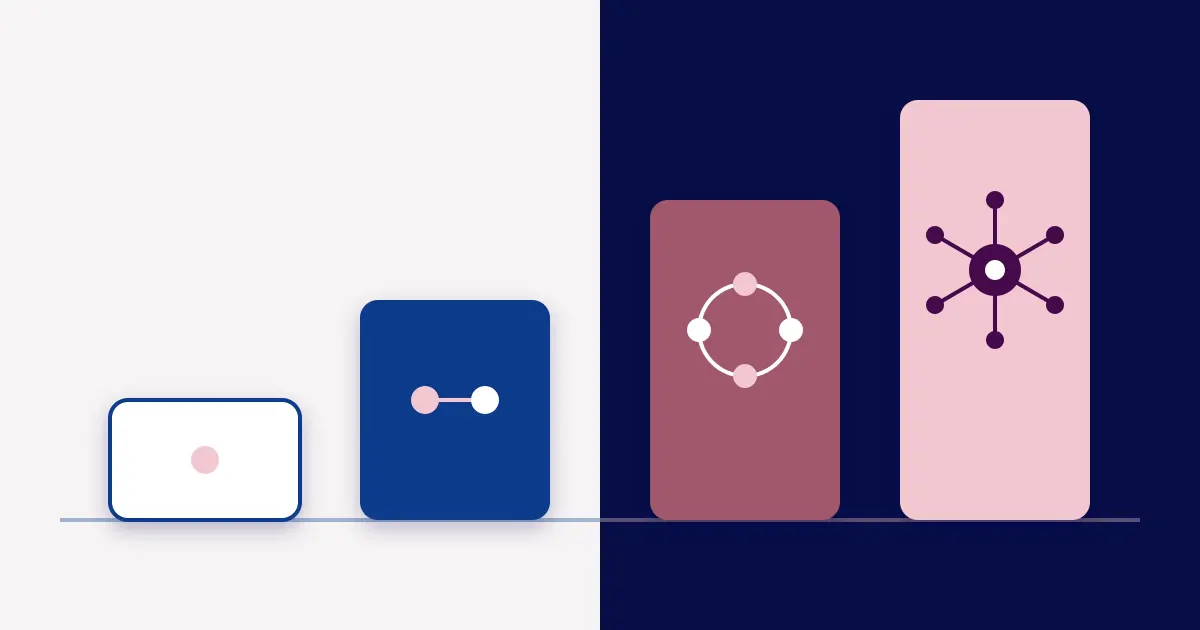
- AI-assisted: people use AI tools on their own. AI-enabled: AI is built into team processes. AI-first: the company redesigns its workflows and operating model around AI. AI-native: the company was designed around AI from the start.
- The quickest test is to switch the AI off. If work only slows, you are AI-enabled. If whole functions stop, that part of the company is AI-native.
- Thoughtworks sees AI-first as the more realistic ambition for most established organizations, because they cannot redesign every system at once.
- BCG found that firms that redesign work and talent with AI outperform peers by more than 11 percentage points in industry-adjusted shareholder returns annually.
- AI-enabled is the right target for some work. The goal is to choose your level on purpose, one workflow at a time.
The labels around AI have multiplied: AI-powered, AI-enabled, AI-first, AI-native. Vendors use them to describe software. This post uses them to describe something more useful to a business owner: how your company runs. You will get a plain definition of each level, a quick way to place your own company, and guidance on which level to aim for next.
What is the difference between AI-native and AI-enabled?
An AI-enabled company adds AI to work that already exists, so the work still runs without it. An AI-native company designs the work around AI, so important functions stop if the AI is switched off.
Kore.ai draws the line the same way: an AI-enabled product still works without the AI, while for an AI-native one, AI is the architectural foundation and the platform stops working without it. Swap “product” for “workflow” and the test applies to your operations.
What are the four levels of AI maturity?
The four levels are AI-assisted, AI-enabled, AI-first and AI-native. The first three are stages an existing company moves through. The fourth describes companies built around AI from day one.
Thoughtworks defines the first three in Path to AI-first organization (September 2026):
- AI-assisted. AI supports existing workflows, with a focus on individual productivity. Employees use chat assistants and writing tools on their own.
- AI-enabled. AI is embedded into processes and operations, raising team productivity. The CRM drafts replies. Meeting notes are summarized automatically.
- AI-first. Products, processes and operating models are redesigned around what people and AI can do together. The workflow itself changes.
- AI-native. Thoughtworks describes an AI-native organization as one whose products, operating model and technology foundations have been designed around AI from the outset.
Gartner uses a longer scale, from Stage 0 with no AI enablement to Stage 5, fully AI-driven. The four levels above are easier to apply to a small or mid-size business.
How do the levels compare?
The levels differ in where AI sits, what happens when it fails, and what the company needs in place to get there.
| AI-assisted | AI-enabled | AI-first | AI-native | |
|---|---|---|---|---|
| Where AI sits | In individuals’ browsers | Inside team tools and processes | At the center of redesigned workflows | In the foundation of the company |
| If AI is switched off | Some people slow down | Teams slow down | Redesigned workflows stop | Core functions stop |
| Who owns it | Each employee | Team leads and IT | Process owners with leadership | Leadership, from day one |
| What it needs | A usage policy and approved tools | Integrations and training | Documented processes, data access, testing | All of the above, built in |
| Typical first project | Rolling out business AI accounts | AI features in the CRM or help desk | Rebuilding lead intake or reporting around AI | Not applicable: it starts here |
Which level is your company at?
Answer these questions honestly. Count your yes answers.
- Do you have a written policy on which AI tools staff may use and what data can go into them?
- Do employees have company-managed AI accounts rather than personal ones?
- Is AI built into at least one shared team tool, such as your CRM, help desk or project tracker?
- Can you name one process where AI does a defined step every time?
- Are your key processes written down well enough that a new hire, or an AI system, could follow them?
- Can your AI systems reach the company data they need, with the right access controls?
- Has any workflow been redesigned so AI does the routine work and people handle exceptions?
- Do you test AI output against known correct answers before trusting it?
- Do you measure an AI workflow’s results, such as time saved or error rate?
- Would any business function stop if your AI tools went down for a day?
Rough reading: 0 to 2 yes answers is AI-assisted or earlier. 3 to 5 is AI-enabled. 6 to 9 is moving into AI-first. A yes to question 10 means at least one part of your company already runs AI-native.
Which level should you aim for next?
Aim one level above where you are, in one workflow first. Most established businesses get the most from moving a single high-volume process from AI-enabled to an AI-first redesign.
When AI-enabled is the right goal
AI-enabled can be the right place to stay for some work. Good examples are work where human judgment is the product, such as legal advice or clinical care, and decisions where regulation requires a person to decide. In those areas, AI that helps people do the work well is the point.
Workday’s advice fits here: match human oversight to how much autonomy the AI has, with tighter review for high-impact decisions about customers, staff, money or compliance.
When to push for AI-first
Push further where the work is high in volume, follows clear rules and is easy to measure. Lead intake, recurring reports, data entry between systems and answering common questions from your own documents are typical.
There is a payoff for going beyond tools. In BCG’s interviews with leaders at more than 50 AI front-runner firms, those that redesigned work and talent with AI rather than only adding tools outperformed peers by more than 11 percentage points in industry-adjusted shareholder returns annually. That sample includes what BCG calls traditional front-runners: incumbent enterprises using AI to optimize and reshape legacy operations or products at scale while keeping their core business model.
Why AI-native is a direction, not a destination
An established company cannot go back and be founded around AI. Thoughtworks explains why a full switch is hard: a typical enterprise runs a mix of legacy systems, software products and older tools that cannot all become AI-native at the same pace. Treat AI-native as the direction each redesigned workflow moves you in. I cover the question in more depth in What is an AI-native company?
What does moving up one level involve?
Moving from AI-assisted to AI-enabled is mostly about policy, approved tools and integrations. Moving from AI-enabled to AI-first means rebuilding a workflow: documenting it, connecting the data, testing the AI’s output and measuring results.
The first move is covered in AI integration services: how to go from zero AI to AI in every workflow. The second is the subject of How to become an AI-native company, a step-by-step roadmap for established businesses.
How I help
I help companies find their next level and get there one workflow at a time.
- AI consulting and strategy: assess where you are, pick the workflows worth redesigning and decide what to leave alone.
- AI automation: build the AI-enabled and AI-first workflows, such as lead intake, CRM updates and reporting.
- AI engineering: custom AI software when off-the-shelf tools fall short, like chat and search that answer from your own content.
Not sure whether a task needs a fixed workflow or an autonomous agent? Read AI agent vs AI workflow, or start a project.
Frequently asked questions
What is the difference between AI-native and AI-enabled? An AI-enabled company adds AI to work that already exists, so the work still runs without it. An AI-native company designs the work around AI, so important functions stop if the AI is switched off.
Is AI-first the same as AI-native? No. AI-native describes a company designed around AI from the start. AI-first describes a company that deliberately redesigns its strategy, workflows and operating model around AI, even though it was not built that way.
Can a company skip levels? Rarely in practice. Each level depends on the one before it. Redesigning a workflow around AI is hard if people have not yet learned to use AI tools and the process has never been written down.
Is being AI-enabled a bad thing? No. AI-enabled can be the right goal for work where human judgment is the product or where regulation requires people to make the decisions. The mistake is staying there by default rather than by choice.
Which level should a small or mid-size business aim for? Aim one level above where you are now, in one workflow first. For most established businesses that means moving from AI-assisted to AI-enabled, or from AI-enabled to an AI-first redesign of one high-volume process.
Sources
- Thoughtworks, May Xu. Path to AI-first organization. September 23, 2026.
- Kore.ai, Gaurav Bhandari. What is an AI-native organization? How to build an AI-native enterprise. Updated September 29, 2026.
- Gartner. What “AI-Native” Means for Enterprise Organizations. Undated.
- BCG, Sagar Goel et al. Five Ways That AI Front-Runners Change How Work Gets Done. September 24, 2026.
- Workday, Esther Monks. Five Ways to Become AI Native. June 25, 2026.